Introduction
In a service business, the most valuable knowledge is usually the knowledge that was never written down anywhere. A master technician who has spent years in that workshop has reflexes like "on this brand's engine, check this first" or "with this type of fault, look at that part first" — and most of the time this knowledge lives only in their head. The apprentice learns it only by working alongside them, over time and by chance. When the master is on leave, leaves the job, or has to look at several vehicles at once on a busy day, that knowledge gap shows up directly in work quality and delivery time. Standardizing master-apprentice knowledge transfer with digital checklists is one of the most practical ways to reduce this dependency and move the knowledge into the company's shared memory.
Önemli Noktalar
- Leaving a master technician's knowledge in verbal form makes service quality dependent on a single person.
- Digital checklists turn the steps the master knows into a written, repeatable standard.
- Because service records are kept in a single flow in Manifolt, control steps can be connected naturally to the work order process.
- Standard control steps can make it easier for the apprentice to proceed in the right order, even while under supervision.
- Thanks to mobile access, checklists can be updated in the workshop, right at the vehicle.
The Risks of Leaving a Master Technician's Knowledge in Verbal Form
Knowledge Becomes Dependent on a Single Person
If a business has only one technician experienced with a particular brand or fault type, the same level of quality may not be maintained when that person is on leave or busy with another vehicle. This can make it harder to distribute the workload evenly, especially in peak seasons or periods when several vehicles are in the service at the same time.
The Apprentice's Experience Is Left to Chance
How much an apprentice learns about a given topic often depends on which jobs they happened to work on alongside the master. Without systematic transfer, some basic control steps may be skipped or applied in the wrong order.
Quality Control Relies on Personal Memory
Saying "I checked this vehicle, there's no problem" is not an adequate record for the business. Without a written trace of which steps were applied, in what order and by whom, it can become difficult to carry out a retrospective review when a customer complaint arrives.
Tying Knowledge to a Standard with Digital Checklists
A Checklist Puts the Master's Reflexes into Writing
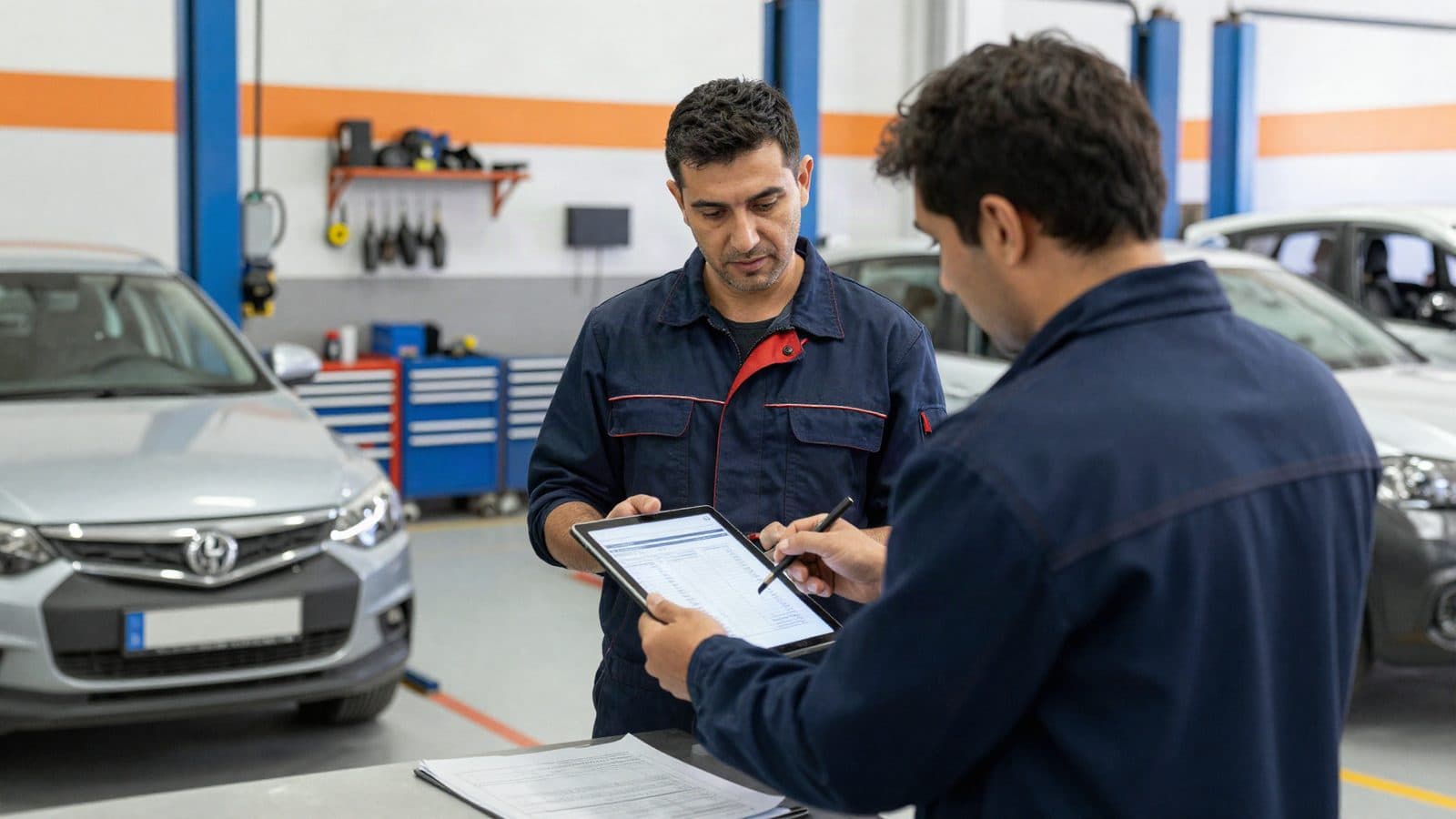
The essence of standardizing master-apprentice knowledge transfer with digital checklists is turning the order and priorities in the master's head into a written, repeatable list. For example, once the sequential steps a master applies for a brake service (inspection, measurement, part replacement, test) are defined, the same standard can be applied every time that work order is opened.
How the Process Can Work in Manifolt
Manifolt registers the vehicle in the system quickly and securely by scanning the registration document or license plate with a phone camera. Once the vehicle record is created, the intake, service and delivery processes proceed within a single flow. The control steps defined on the work order tied to this flow can make visible where the apprentice is and which step has been completed. Because service records, customers and payment collections are managed in the same flow, a delay in the control process can stop being a blind spot independent of the other operational steps.
The Link to Parts and Labor Tracking
Because parts ordering and labor status can be tracked in Manifolt, a step in the checklist (for example, "part replacement approved") can be linked directly to parts and labor resource management. This way, the apprentice can see more clearly which resource needs to be ready at which step.
Points to Watch in the Checklist Approach
- Control steps should be written in short, clear wording; technical jargon should be kept to a minimum.
- It should be stated which vehicle type or fault category each step applies to.
- The list should be treated not as a fixed document but as a living reference tied to the work order process.
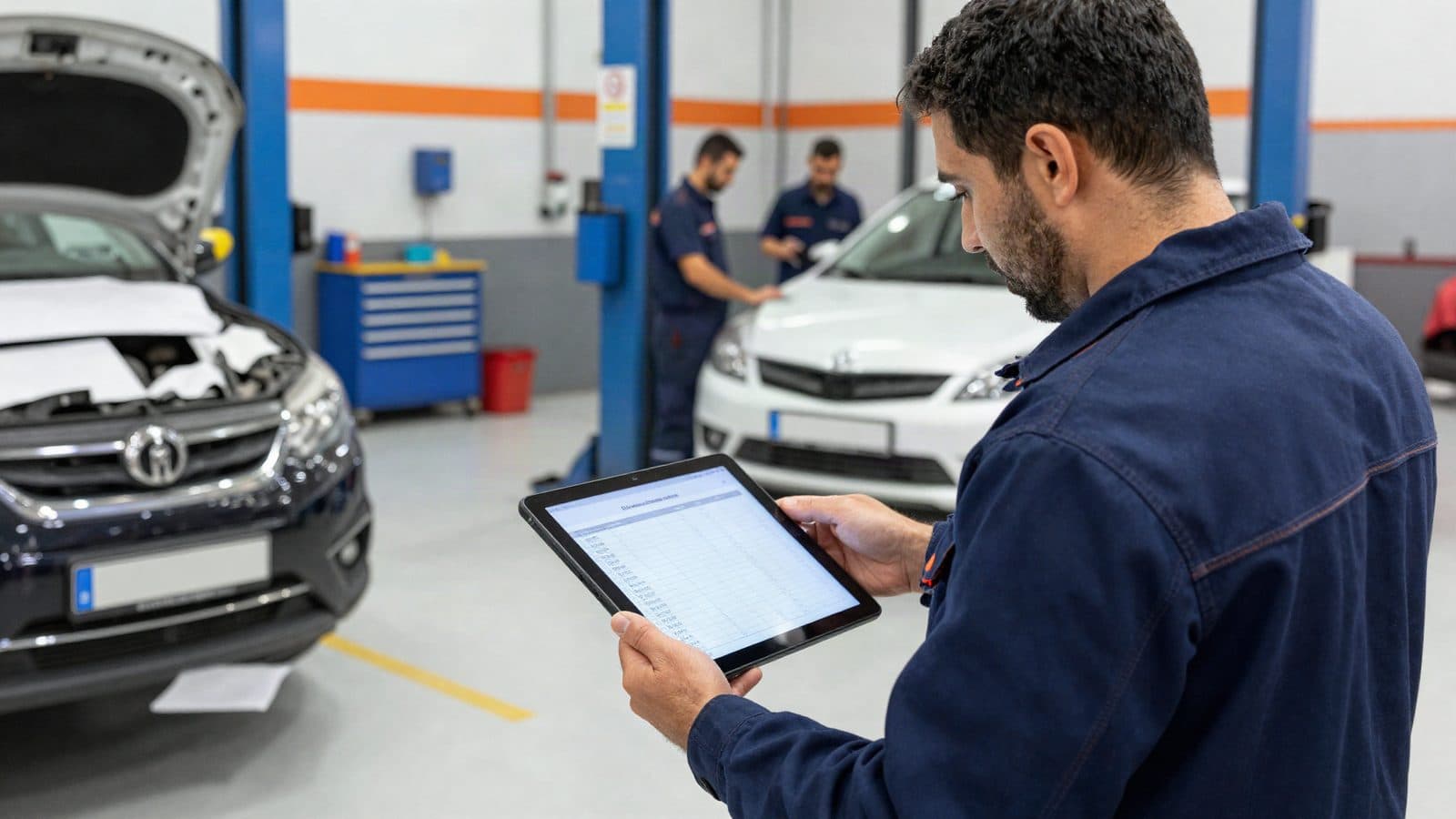
- Thanks to mobile access, the apprentice can check the list while standing at the vehicle; there is no need to go to the office and look for paper.
The example below (a fictional scenario) summarizes the difference between verbal transfer and the digital checklist approach:
Situation Verbal Transfer Digital Checklist When the master is on leave The apprentice tries to remember the steps The list appears in the same order on every work order When a new apprentice starts Knowledge is transferred over time, by chance Standard steps are defined from the start When a customer complaint arrives It can remain unclear which step was done A record of the steps exists on the work order On busy days The master may not be able to get to every vehicle The apprentice can proceed by following the listConclusion
The master-apprentice relationship will continue to be one of the most valuable assets of service businesses; however, leaving this knowledge dependent on verbal transfer alone can make the business dependent on a single person. By turning this knowledge into a written, repeatable and traceable standard, digital checklists can support the apprentice's learning process and contribute to more consistent service quality. Manifolt's service records, work order and parts-and-labor tracking, all managed in a single flow, lay the groundwork for such control steps to settle naturally into daily operations.
Sıkça Sorulan Sorular
Can a digital checklist completely replace a master technician's knowledge?
No, a checklist does not fully substitute for the master's experience; it puts the basic steps they know into writing so that the apprentice and the team can access this knowledge more easily. The master's experience still remains decisive in complex and unexpected situations.
How should checklists be divided by vehicle or fault type?
This depends on the business's own workflow; it is generally more practical to divide them by brand, model group or fault category (such as brakes, engine, electrical). In Manifolt, distinctions of this kind can be tracked on the work order.
How does mobile access make using a checklist easier?
Thanks to the mobile-friendly interface, the apprentice or technician can view the checklist and move through it while standing at the vehicle; this can reduce the need to search for paper documents in the workshop or walk back and forth to the office.
More from this author
One Digital File for Every Vehicle: Manifolt as Easy-to-Use Auto Repair Software
Müşteri bilgisi, plaka ve araç geçmişini tek yerde tutan, kullanımı kolay bir oto tamir programı mı arıyorsunuz? Seçim kriterlerini ve Manifolt'u inceleyin.
Auto Repair Software Options in Turkey: Manifolt for Plate Registration, Vehicle History and Maintenance Tracking
Türkiye'de oto tamir programı mı arıyorsunuz? Plaka taramalı araç kaydı, araç geçmişi, bakım takibi ve tahsilat için seçenekleri ve Manifolt'u inceleyin.

Recognize a Returning Vehicle at First Glance: A Guide to Choosing Easy-to-Use Auto Repair Software, and Manifolt
Müşteri, plaka ve araç geçmişini kaydeden, önceki işlemleri gösteren kullanımı kolay oto tamir programı mı arıyorsunuz? Seçim kriterleri ve Manifolt rehberi.

From Ledger to Cloud: Auto Repair Software Options for Auto Service Shops in Türkiye, and Manifolt
Türkiye'de oto tamir programı mı arıyorsunuz? Müşteri, plaka, araç geçmişi kaydı ve bakım takibi için seçenekleri ve Manifolt'un sunduklarını inceleyin.

Customer, Plate and Vehicle History in One Place: A Service Record Guide with Manifolt Auto Repair Software
Manifolt oto tamir programı ile müşteri, plaka ve araç geçmişini tek akışta kaydedin; önceki işlemleri görün, servis ve tahsilat süreçlerini mobilden yönetin.